User Manual:
https://blog.opensourcesdrlab.com/archives/plutosky-R2
Github Repo:
https://github.com/OpenSourceSDRLab/PlutoSky-R2
Tutorial Videos
Main hardware updates for the PlutoSky R2:
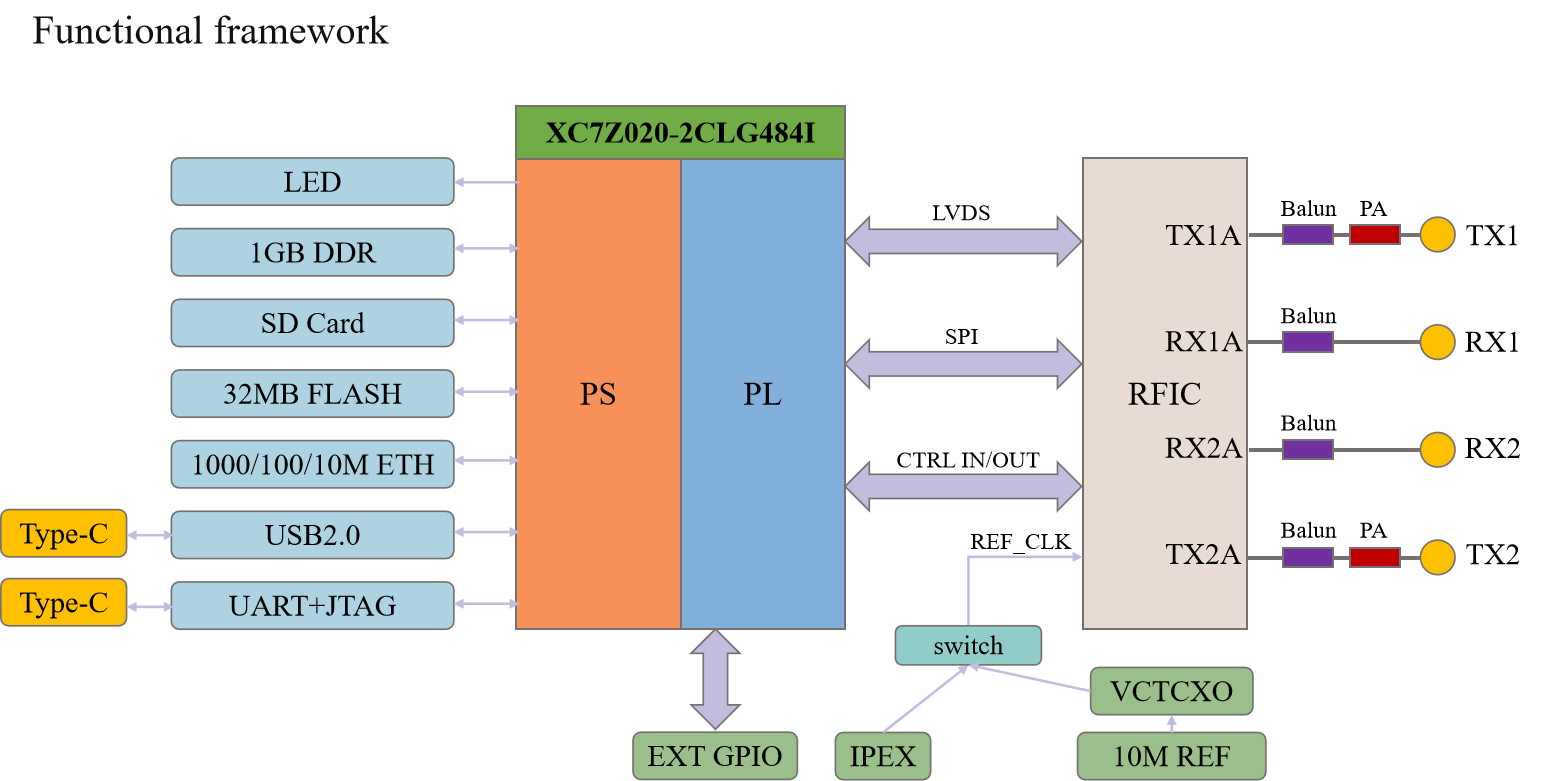
1. The main chip has been replaced with XC7Z020-2CLG484I (formerly XC7Z020-2CLG400I), which has more resources. XC7Z020-2CLG484 has the same Z-7020 core resources, but offers much more usable external I/O.
2. Added a 10MHz reference clock, which can be used to lock the onboard crystal oscillator.
3. As shown in Figure 1, short circuit this area with a 2.54mm jumper cap, and you can choose to use an external 40MHz clock (note that the device needs to have onboard Flash firmware and the jumper cap should be operated to short circuit the device when it is powered off).
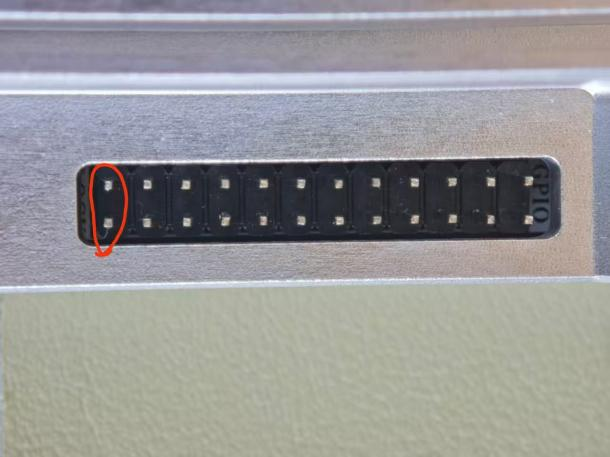 Fig. 1 Onboard flash firmware boot mode using the jumper cap can be connected in this way to directly use an external 40M clock input
As shown in Figure 2, users can also use GPIO to control whether to use an external 40MHz clock or an internal onboard 40MHz clock (note that the device needs to be Tezuka firmware that requires an SD card, and the device needs to perform jumper cap short circuiting operation when powered off).
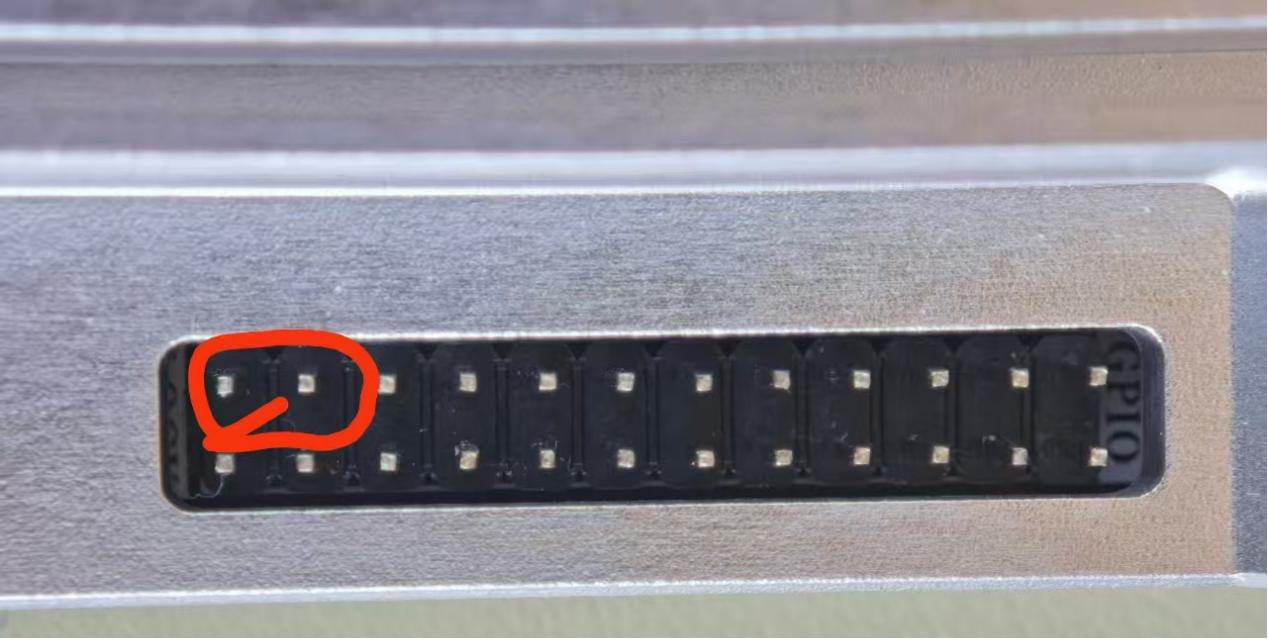
Fig. 2 SD card firmware boot mode using GPIO to control whether to use an external 40MHz clock or an internal onboard 40MHz clock
4. The network port has been added to the PL end (FPGA programmable logic program logic) instead of the traditional PS end (processor system PS). Customers can directly use logical resources for data transmission without the need for ARM cores to achieve data transparency.
Highlight Features:
1. Two sets of firmware are pre installed on the board at the factory. The SD card firmware defaults to burning Tezuka firmware, which is compatible with PlutoSky R2 and will be continuously updated with new features; The onboard Flash firmware defaults to flashing the original ADALM PlutoSDR modified firmware.
2. Onboard hardware phase-locked loop, calibrated with a 10MHz reference to onboard 40M crystal oscillator. However, this product is a phase-locked loop implemented through hardware, and its performance is superior to software phase-locked loops of other similar products.
3. The board supports external GPIO expansion, and expansion daughter cards will be introduced in the future.
4. The product can be optionally equipped with an amplifier at the shooting end. Please distinguish between SKUs.
Hardware Specifications:
|
Without PA |
With PA |
| SKU Code |
PLUTOSKY-R2-9361-NOPA |
PLUTOSKY-R2-9363-NOPA |
PLUTOSKY-R2-9361-PA |
PLUTOSKY-R2-9363-PA |
| RFIC |
AD9361BBCZ |
AD9363BBCZ |
AD9361BBCZ |
AD9363BBCZ |
| Processor |
XC7Z020-2CLG484I |
| LO frequency |
70M-6GHz |
70M-6GHz(hack) |
70M-6GHz |
70M-6GHz(hack) |
| Bandwith |
200K-56MHz |
200K-20MHz |
200K-56MHz |
200K-20MHz |
| Power Amplifier |
No |
10dB gain, By switching the soldering position of the RF front-end capacitor (changing the direction of capacitor soldering), hardware modification bypass can be achieved |
| RF Interface |
2T2R(Full-duplex) |
| DDR3 |
1GB |
| FLASH |
32MB |
|
1000/100/10M ETH
|
One (PL) |
| UART+JTAG |
One(Type-C) |
| USB2.0 |
One(Type-C) |
| SD Card slot |
One(PS Boot) |
| Extend IO |
1.8V IO*19 |
| RFIC CLOCK |
IPEX/VCTCXO(Default VCTCXO) |
| Size |
CNC:96x64mm |
| Power supply mode |
USB/JTAG/Pin header |
Frequently asked questions (FAQs)
1. Does the device support PPS (Pulse Per Second) input?
Answer: PPS calibration of onboard clock is not supported. However, when using an onboard 40MHz clock, it supports calibrating the onboard clock with a 10MHz input.
2. What are the functions of the three internal IPEX connectors on the circuit board?
Answer: They are 40M clock input, TX local oscillator, and RX local oscillator.
3.Does the device support internal clock and external clock switching?
Answer: PlutoSky R2 supports GPIO settings to determine whether to use an onboard 40MHz clock or an external 40MHz clock.
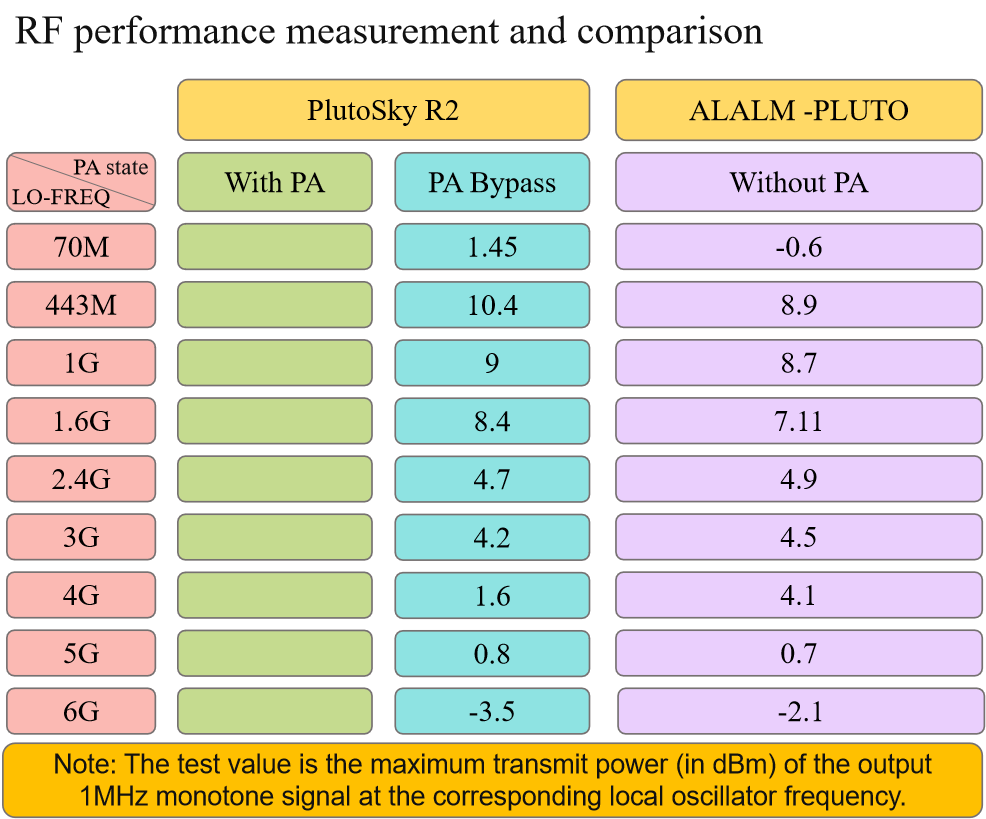
We will produce PLUTOSKY-R2-9361-PA and PLUTOSKY-R2-9363-PA version in the near future and supplement the test result data.


