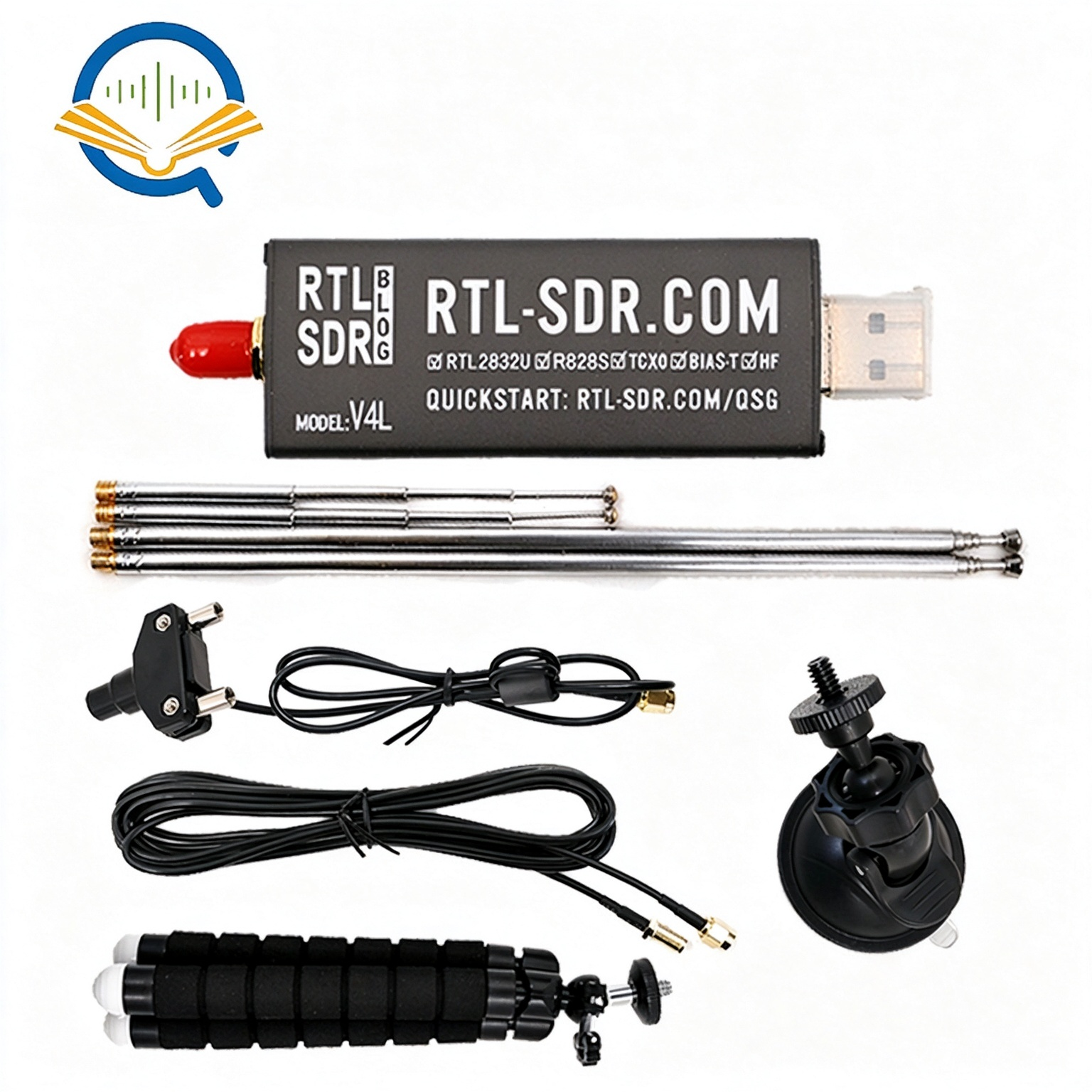
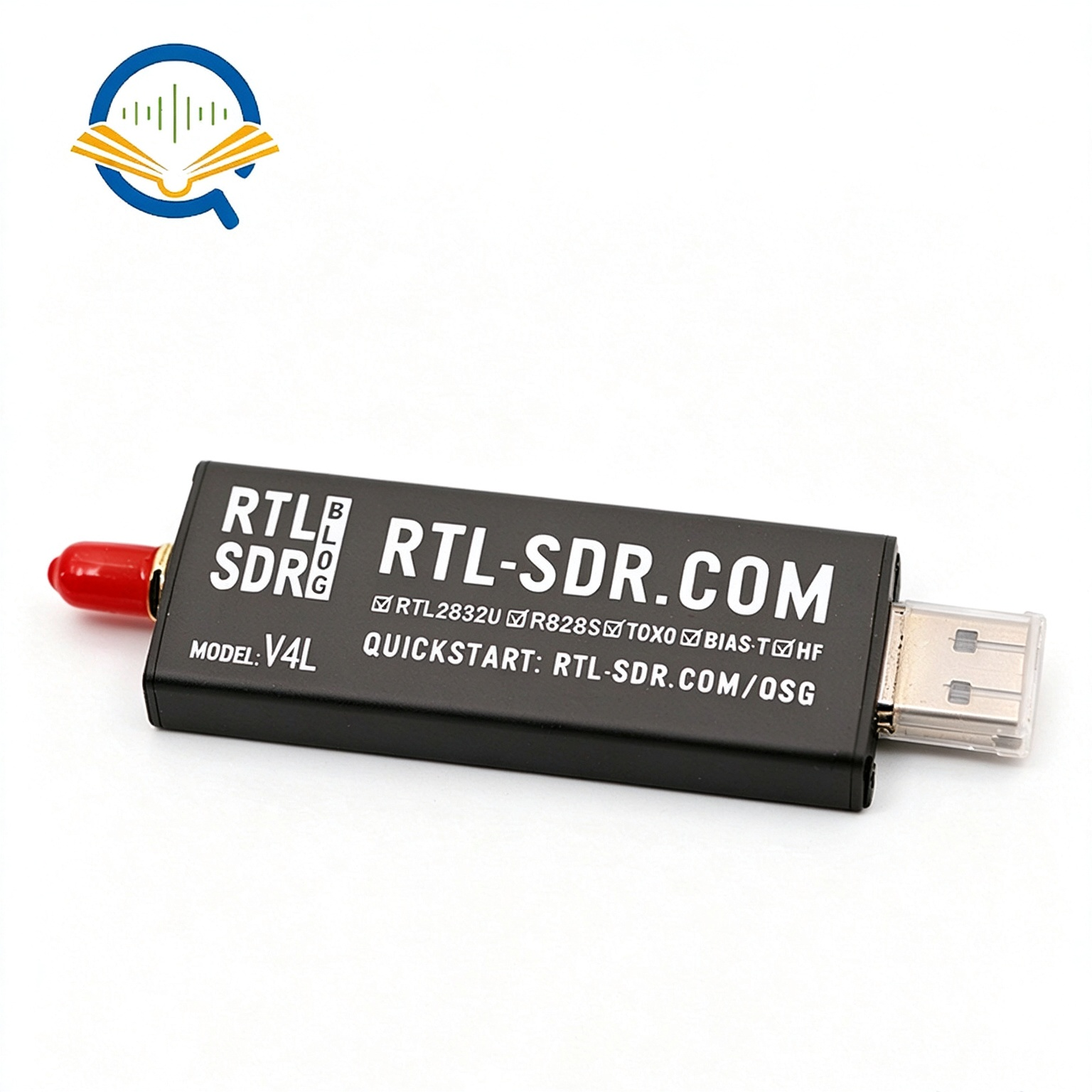
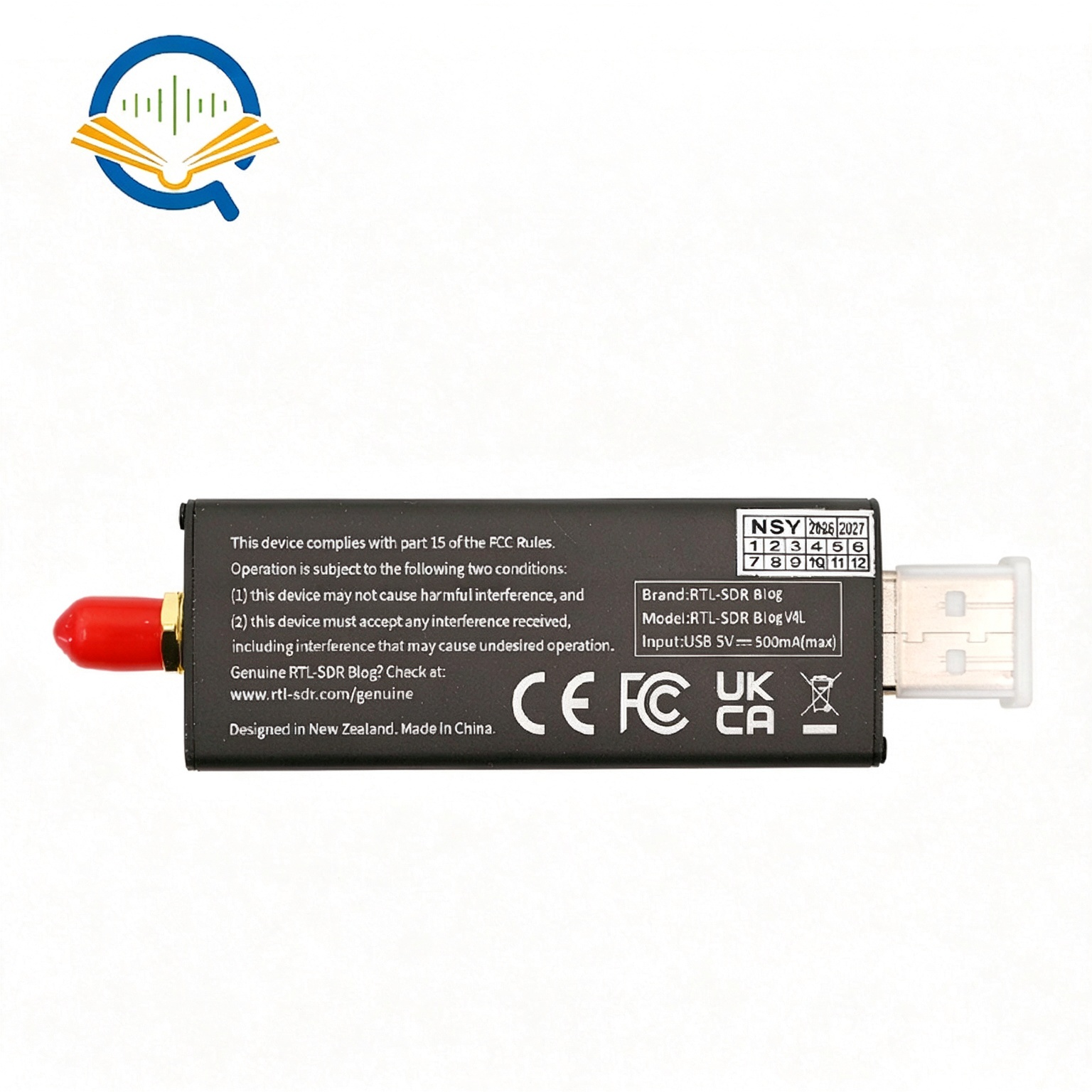
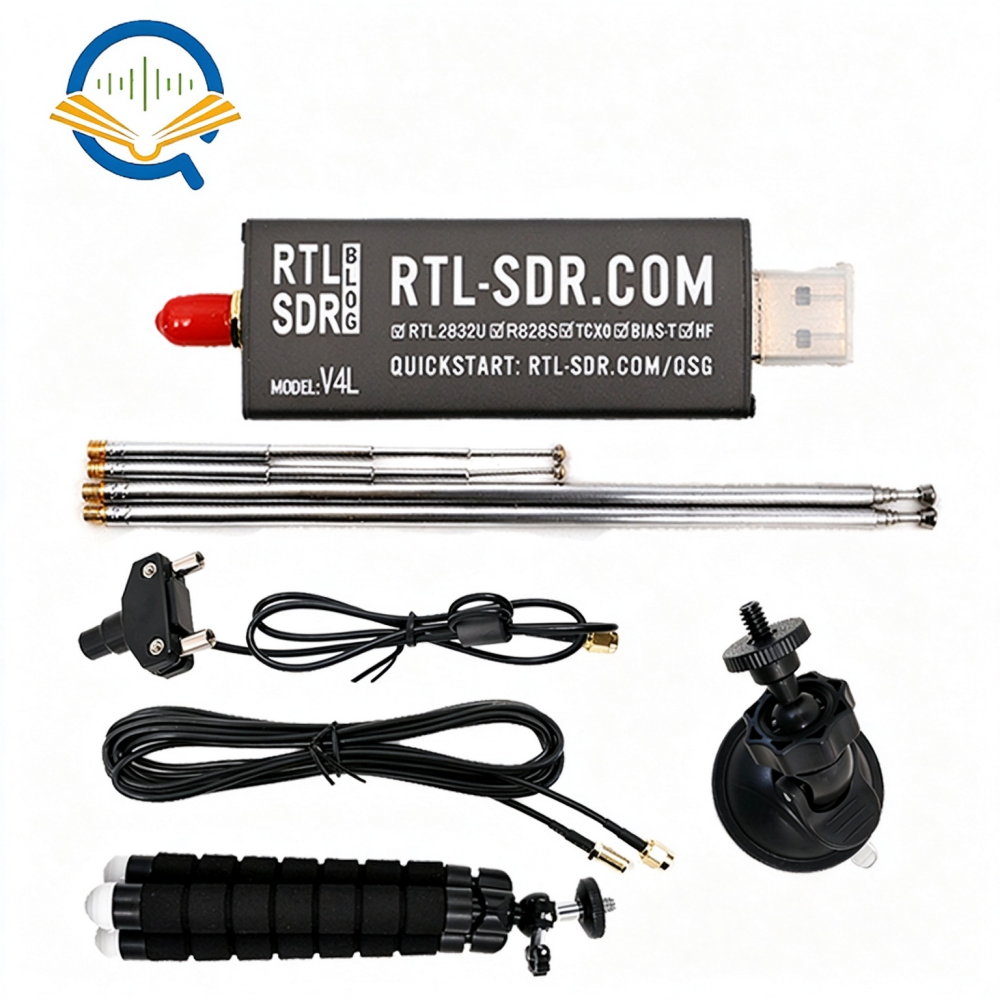
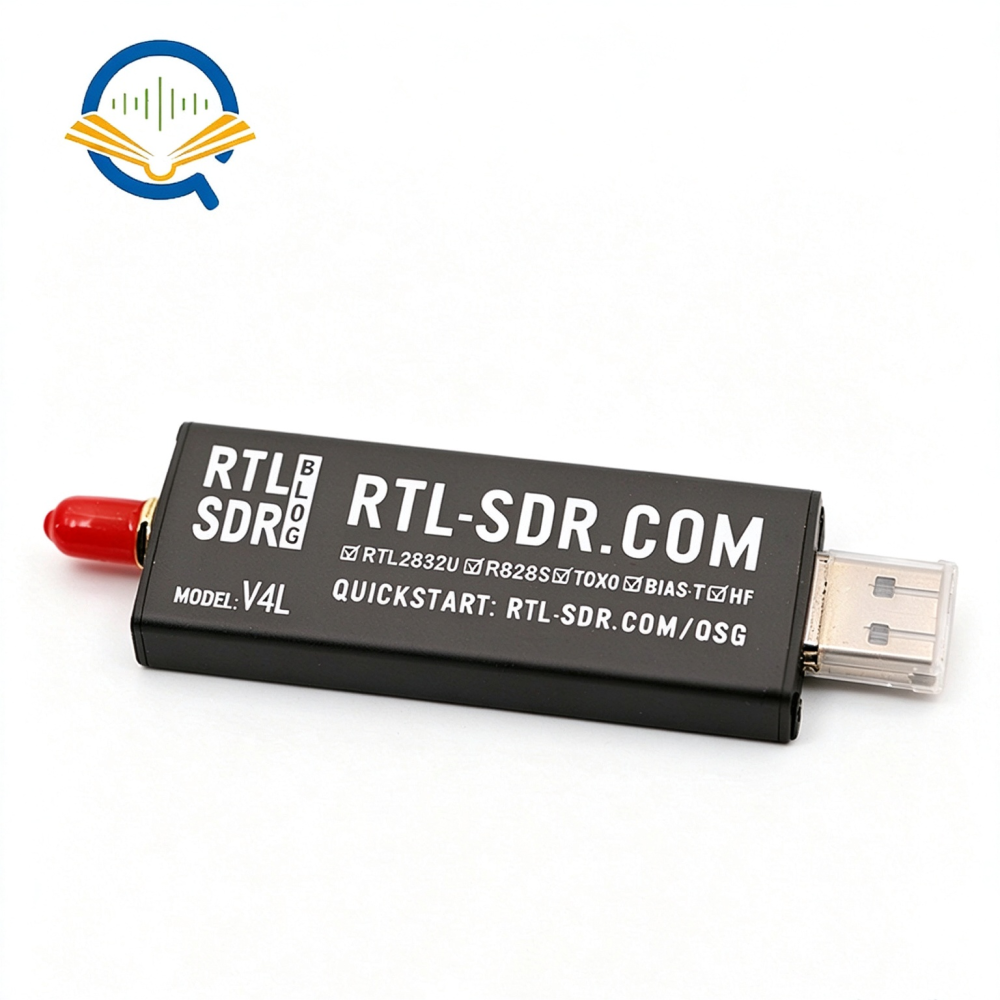
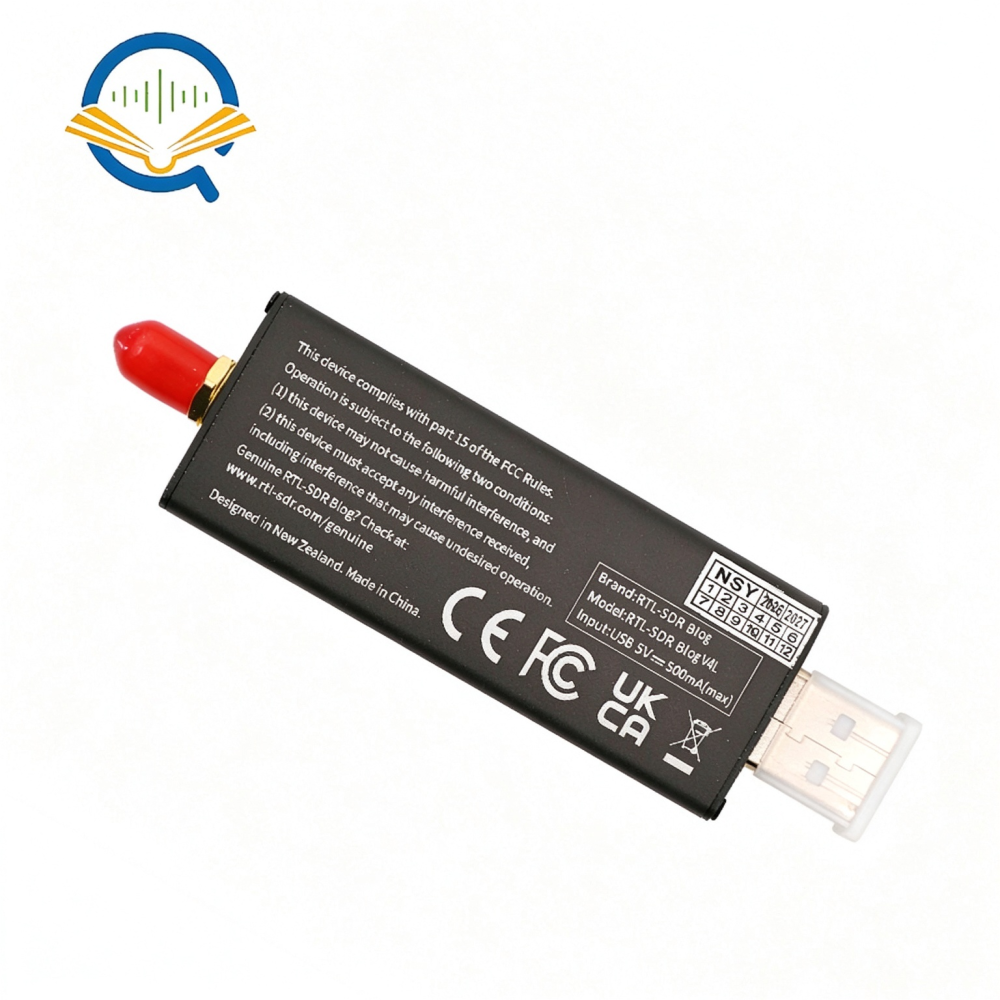
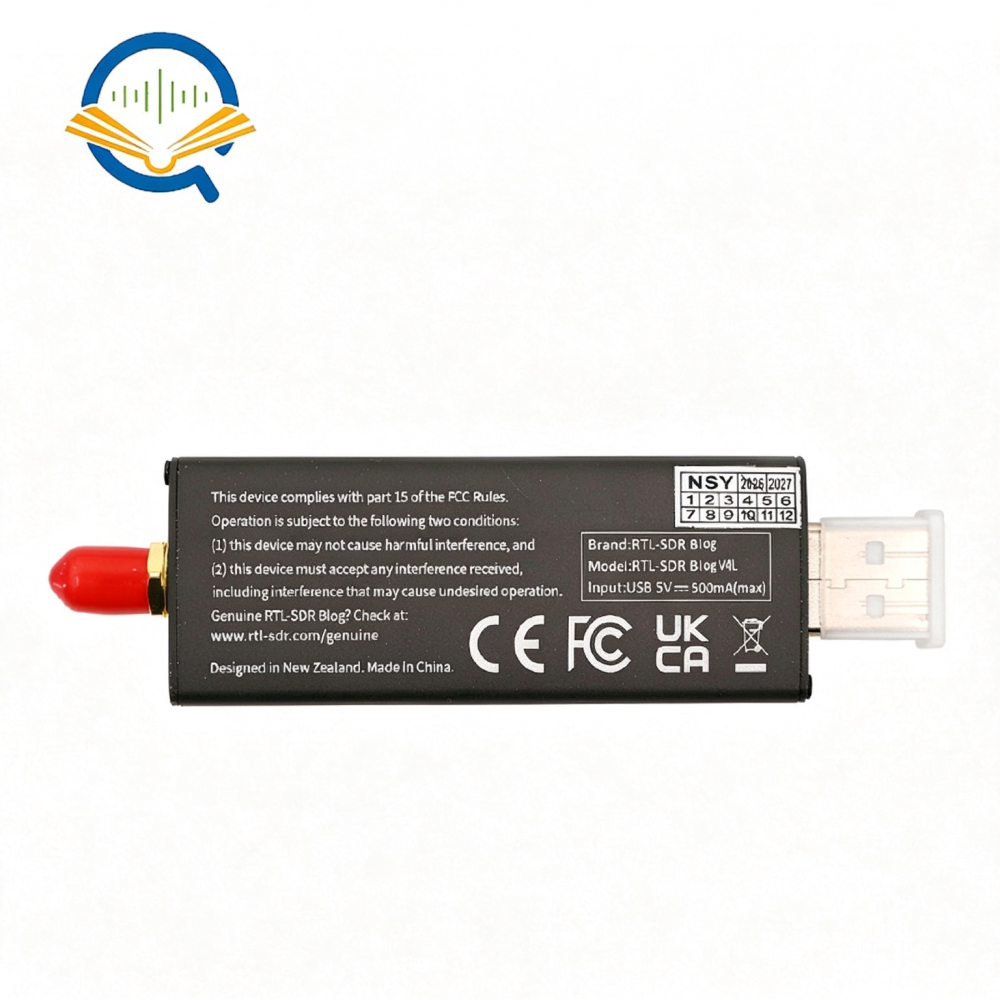
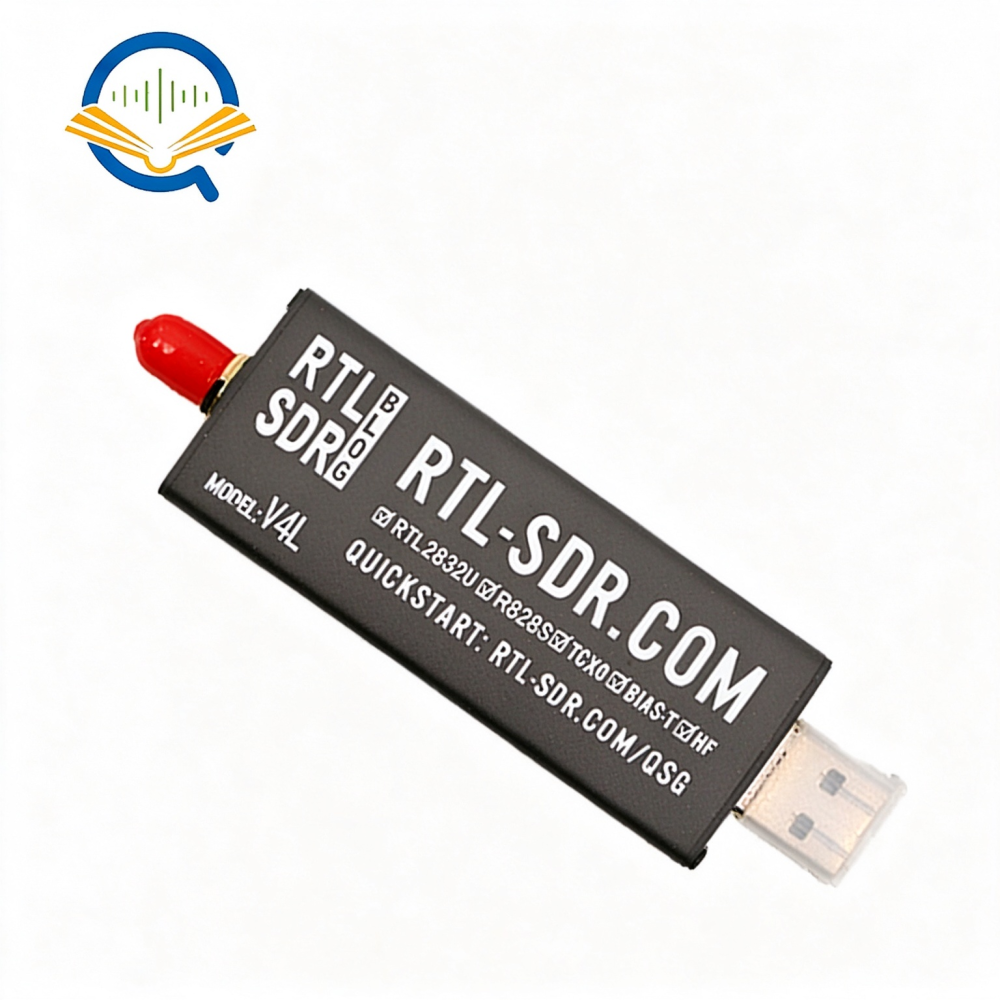
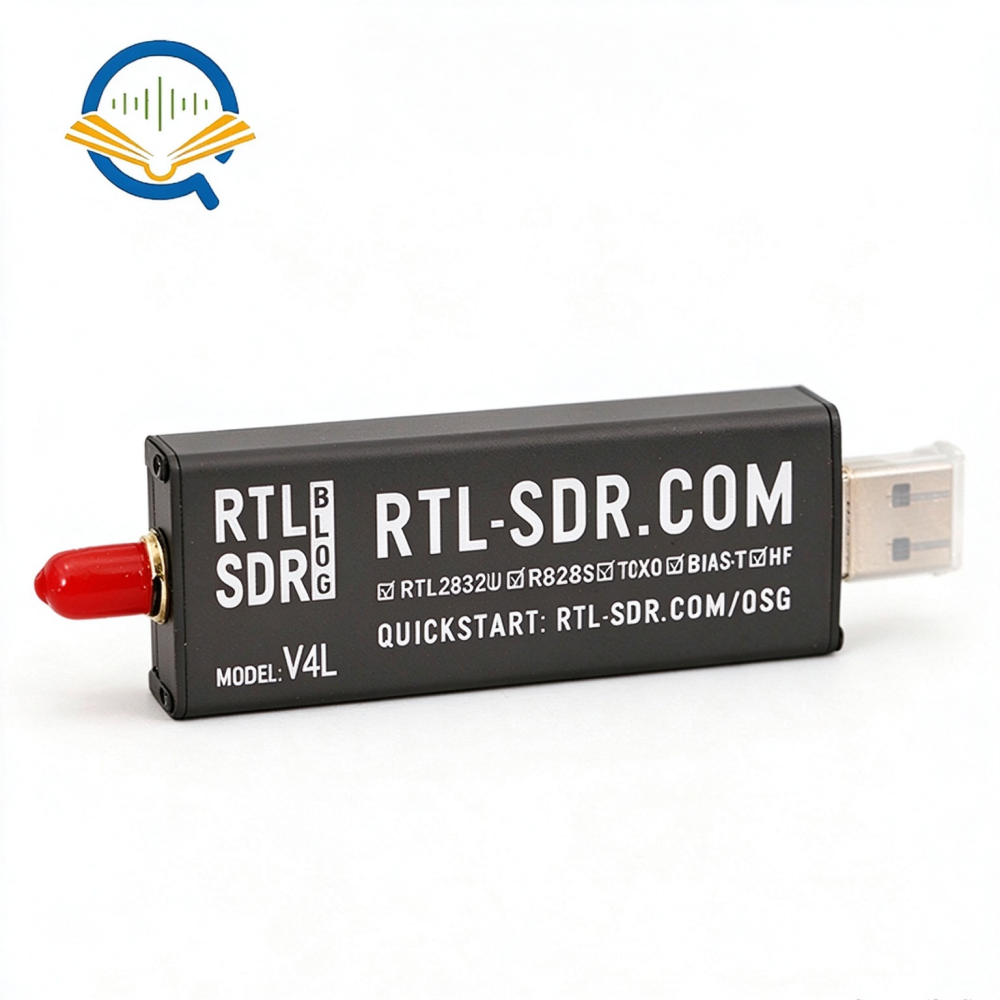
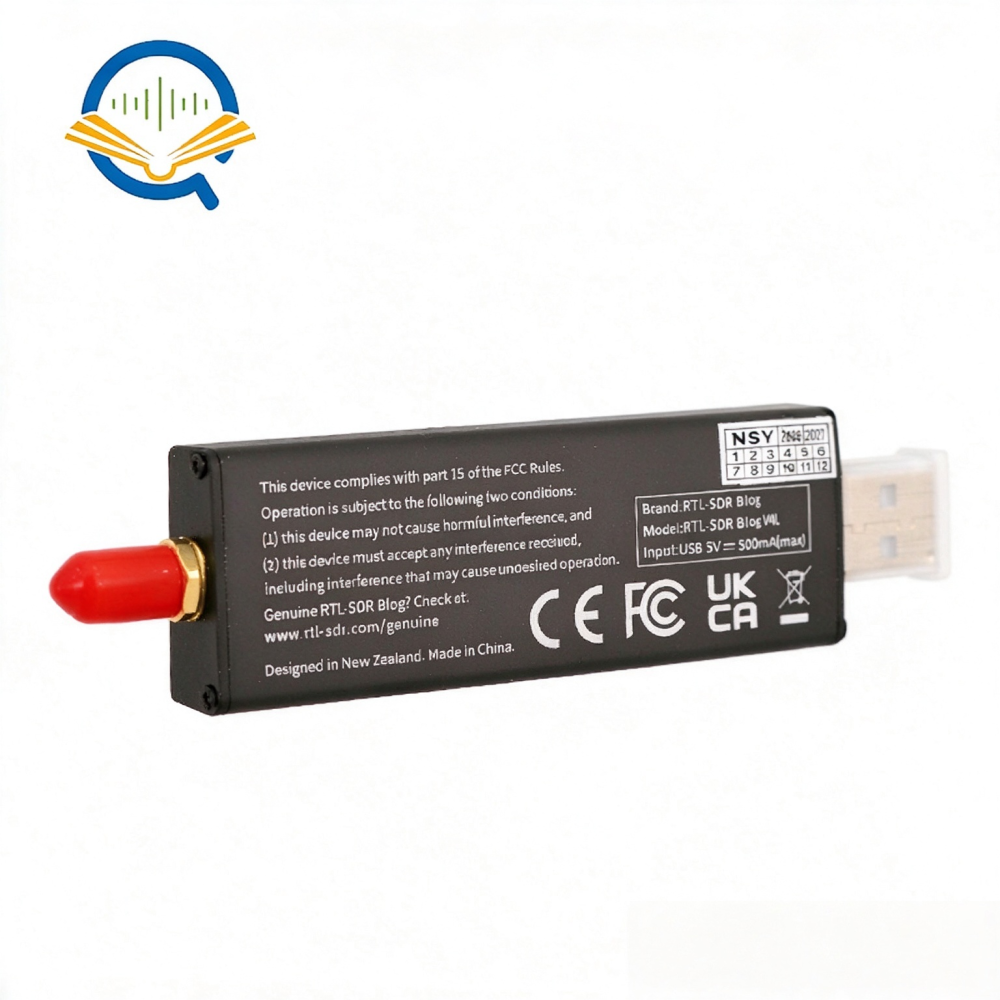
The RTL-SDR Blog V4L (Lite) is an improved RTL-SDR dongle. RTL-SDR dongles were originally designed for DVB-T HDTV reception, but they were found by hardware hackers to be useful as a general purpose SDR. The standard dongles are okay for DVB-T reception but are just barely suitable for SDR users/experimenters. The RTL-SDR Blog V4L was redesigned with SDR user needs in mind, instead of DVB-T HDTV users who typically have more relaxed requirements.
| Parameter |
Specification |
| Tuner Chip |
R828S |
| ADC Chip |
RTL2832U 8-bits |
| Frequency Range |
500 kHz to 1.766 GHz |
| Bandwidth |
2.56 MHz stable (up to 3.2 MHz with drops) |
| Typical Input Impedance |
50 Ohms |
| Typical Current Draw |
250 - 270 mA |
| HF Implementation |
Upconverter with 28.8 MHz LO |
| Input Connector |
1x SMA |
| USB Connector |
USB-A Male |
| Local Oscillator Stability |
1PPM TCXO |
| Bias Tee |
4.5V, 180mA (software switchable) |
| Enclosure |
Aluminum |
| Heat Dissipation |
Thermal Pad to Aluminum Enclosure |
| Front End RF Design |
Diplexor |
| Transmit Capability |
None |
Improvements on the V4L model
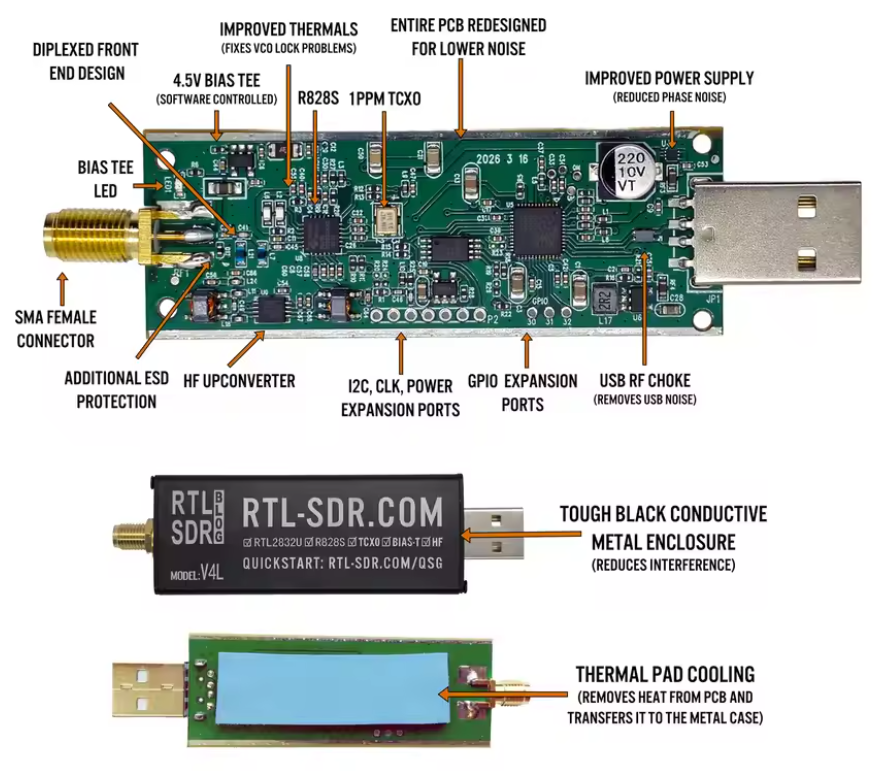
- Improved HF Reception. Now uses a built in upconverter instead of using a direct sampling circuit. This means no more Nyquist folding of signals around 14.4 MHz, improved sensitivity, and adjustable gain on HF. Like the V3, the lower tuning range remains at 500 kHz and very strong reception may still require front end attenuation/filtering.
- Improved phase noise on strong signals. Due to an improved power supply design, phase noise from power supply noise has been significantly reduced.
- Less heat. Due to the improved power supply design the V4L uses slightly less current and generates slightly less heat compared to the V3.
Quickstart setup guide available at: www.rtl-sdr.com/qsg
Online Users Guide: https://www.rtl-sdr.com/V4L
NOTE:
Please note that this is the new V4L (Lite) unit, and not all software supports it yet. Compatibility with most programs on Windows and Linux is now satisfactory, but macOS and Android support are still being adapted.
Introduction:
This is an RTL-SDR software-defined radio receiver featuring the RTL2832U ADC chip, R828S tuner, 1 PPM TCXO, SMA female connector, and an aluminum enclosure with passive cooling. It covers frequencies from 500 kHz to 1.7 GHz with a bandwidth of up to 3.2 MHz (2.4 MHz for stable operation). It works great as a computer-based radio scanner with free software such as SDR#, HDSDR, SDR-Radio, GQRX, or SDR Touch for Android. It is compatible with Windows, macOS, Linux, Android, and single-board computers like the Raspberry Pi.
It is ideal for a wide range of applications including general radio scanning, air traffic monitoring, public security, aircraft ADS-B, marine AIS, ACARS, trunked radio, P25/MotoTRBO digital voice, POCSAG, weather balloons, APRS, Meteor M2/GOES weather satellites, radio astronomy, DAB, or as a low‑cost panadapter for radio amateurs.
This model has several upgrades compared to other brands. It uses an improved R828S tuner, optimized front-end, 1 PPM TCXO, higher-quality components, a lower-noise PCB, enhanced cooling, extra ESD protection and an SMA female connector. It also features software-switchable bias tee circuitry to power LNAs and active antennas, and supports HF reception.
Most standard RTL-SDR dongles only tune down to 24 MHz as the minimum frequency. This model has a built-in frequency converter that extends reception down to 500 kHz, with an integrated 28.8 MHz low-pass filter to optimize this HF mode.